
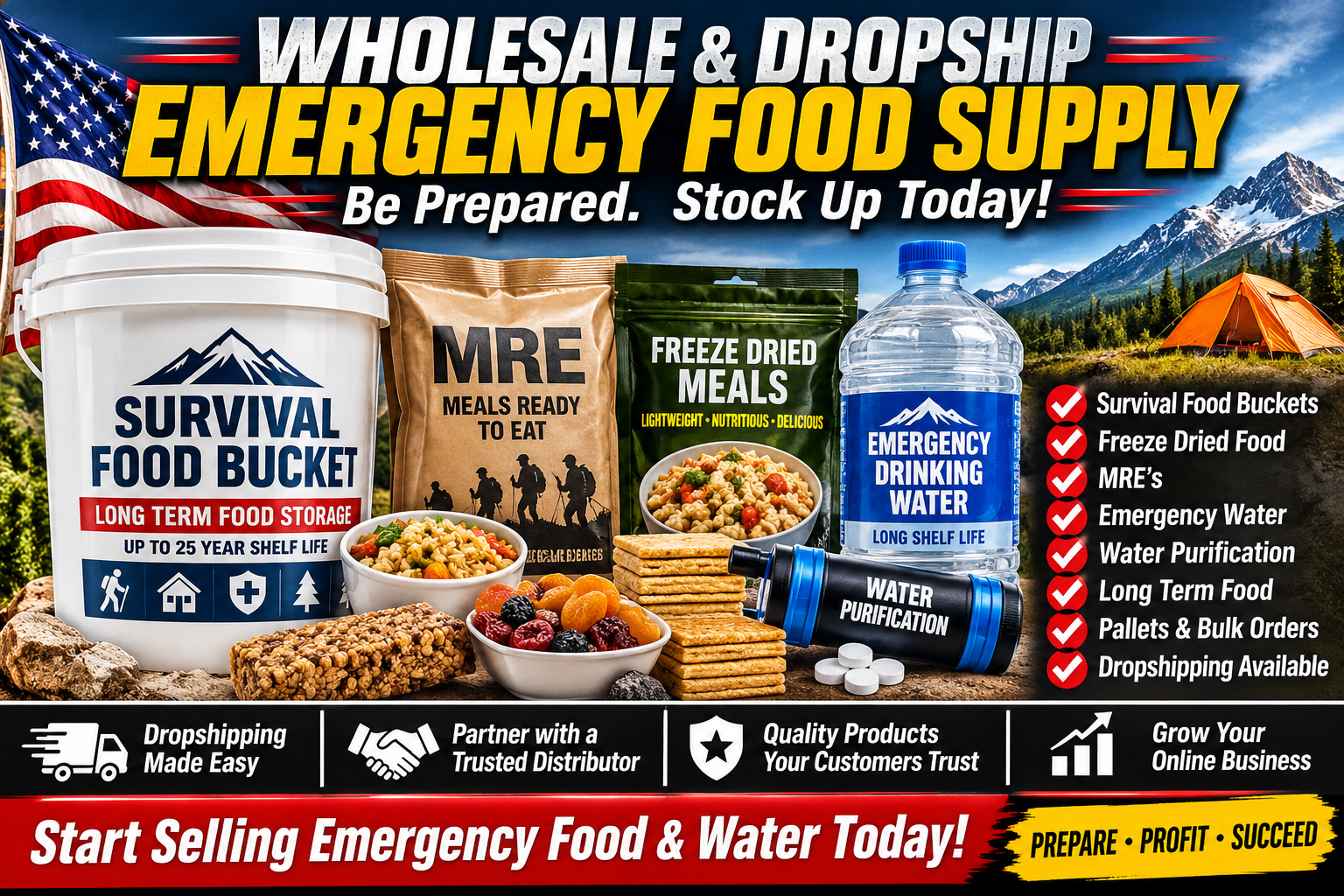
SOURCING WHOLESALE & DROPSHIP EMERGENCY FOOD SUPPLY
Let’s discuss:
– Wholesale emergency food supply
– Dropship emergency food
– Survival food buckets
– Freeze dried food
– MREs
– Wholesale long term food
– Emergency food distributor
– Pallets of survival food
– Emergency food supply
– Dropshipping emergency food & water
1. The Growing Demand for Emergency Food Supply Products
Emergency preparedness has become an important consideration for households, outdoor enthusiasts, travelers, campers, and people who want to be prepared for unexpected events. Severe weather, hurricanes, wildfires, winter storms, power outages, supply-chain disruptions, and other emergencies can interrupt access to grocery stores and everyday necessities. As a result, consumers increasingly look for a dependable emergency food supply that can be stored at home, in a vehicle, or at a designated emergency shelter. For online retailers, emergency food and survival food products represent an opportunity to serve customers who want convenient, shelf-stable products they can purchase before an emergency occurs.
2. Sourcing Wholesale Emergency Food from Distributors
Retailers interested in selling emergency food online should begin by researching wholesale food suppliers, manufacturers, and distributors specializing in disaster preparedness and long-term food storage. A qualified wholesale distributor may offer a broad selection of survival food products, including freeze-dried meals, food storage buckets, MREs, emergency ration bars, canned foods, dehydrated ingredients, drinking water, and water purification products. Working with an established distributor allows online retailers to access recognized brands and product variety without having to manufacture, package, or warehouse every product themselves.
3. Survival Food Buckets Are Popular with Preparedness Customers
One of the most recognizable products in the emergency preparedness industry is the survival food bucket. These food buckets are designed to provide multiple servings of shelf-stable meals and ingredients inside convenient, durable containers. Depending on the package, food buckets may contain breakfasts, entrees, soups, vegetables, rice, pasta, fruit, snacks, and other meal components. Many consumers appreciate buckets because they are easy to store, organize, transport, and include in a household emergency preparedness plan. Retailers can offer different sizes, calorie counts, serving quantities, and durations to appeal to individuals, couples, and families.
4. Freeze-Dried Food for Long-Term Emergency Storage
Freeze-dried food is one of the most popular categories of long-term emergency food because it can offer lightweight packaging, convenient storage, and a variety of meal choices. Freeze-drying removes much of the moisture from food while helping preserve its flavor, texture, and nutritional characteristics. Many freeze-dried meals are prepared by adding water, making them practical for emergency situations where conventional cooking facilities may be unavailable. Online sellers can offer freeze-dried breakfasts, pasta dishes, rice meals, meat products, vegetables, fruits, desserts, and complete meal kits. Product shelf life varies by manufacturer, packaging, and storage conditions, so retailers should clearly display product specifications.
5. Meals Ready to Eat (MREs)
MREs, or Meals Ready to Eat, are another important category of emergency food products. Meals Ready to Eat are designed to provide convenient meals that can be consumed with little or no conventional cooking. Many MRE packages include an entree, side dish, snack, dessert, beverage mix, utensils, and sometimes a flameless heating component. MREs are popular among campers, hikers, hunters, outdoor workers, military enthusiasts, emergency responders, and preparedness-minded consumers. They can be especially useful during evacuations, vehicle emergencies, power outages, and disasters when people may not have access to a kitchen.
6. Which Emergency Food Products Sell Well Online?
Products with recognizable benefits, convenient packaging, and clearly explained serving quantities can be attractive to online shoppers. Common product categories worth researching include emergency food buckets, multi-day meal kits, freeze-dried entrees, MRE cases, emergency food bars, powdered milk, dried fruits, vegetables, rice, beans, pasta, canned meats, and water storage products. Customers frequently compare total servings, calories per serving, package size, shelf life, ingredients, preparation requirements, and price. Retailers should create informative product descriptions that help shoppers understand exactly what they are purchasing rather than relying solely on product photographs.
7. Wholesale Long-Term Food Storage Packages
Selling wholesale long term food packages gives retailers an opportunity to serve consumers planning for extended emergencies. These packages may be designed for one person, a couple, or an entire family, with food quantities calculated for different durations. One-month, three-month, six-month, and larger food storage packages are common formats throughout the preparedness market. Customers may prefer buying a complete package instead of individually selecting hundreds of products. A retailer can organize products around household size, estimated servings, calorie requirements, storage space, and budget to make the shopping experience easier.
8. Emergency Food Bars and Ready-to-Eat Rations
Emergency food bars are another product category worth considering when building an online emergency food store. These compact ration products are designed to provide calories in situations where cooking, refrigeration, and food preparation are not practical. They are commonly purchased for evacuation bags, automobile emergency kits, boats, camping equipment, workplace emergency supplies, and disaster preparedness kits. Their compact size and simple preparation requirements make them appealing to consumers who want portable food that can be stored for emergencies. Retailers can sell individual packages, multi-packs, cases, and food-and-water emergency kits.
9. Water Purification and Emergency Drinking Water
An emergency food supply is incomplete without a dependable drinking water plan. During natural disasters, municipal water systems may be disrupted, damaged, contaminated, or temporarily unavailable. Retailers should consider offering water purification products alongside emergency food, including water filters, purification tablets, emergency water pouches, water storage containers, portable filtration systems, and water purification equipment. Customers purchasing survival food buckets or MREs may also need products for obtaining, storing, and treating drinking water. Combining food and water preparedness products can help customers build more comprehensive emergency supply inventories.
10. Dropshipping Emergency Food & Water
Dropshipping emergency food & water can provide online retailers with an alternative to purchasing large amounts of inventory upfront. With a dropshipping arrangement, the retailer lists products on their website, receives customer orders, and submits the orders to an approved distributor or supplier. The supplier then fulfills and ships the merchandise directly to the customer, subject to the supplier’s terms and capabilities. This model can reduce the need for warehouse space, inventory handling, and the initial investment associated with purchasing large quantities of emergency food. Retailers should verify which specific products, brands, and shipping destinations their distributor supports.
11. Finding a Wholesale Emergency Food Dropshipper
Choosing the right distributor is an important step when establishing an online emergency food business. Retailers should look for suppliers that offer competitive wholesale pricing, dependable order fulfillment, accurate inventory information, product data feeds, reliable shipping services, and a variety of emergency food brands. Some wholesale suppliers offer dropshipping programs, allowing approved online dealers to sell products without stocking merchandise themselves. Before opening a wholesale account, investigate shipping costs, order processing times, minimum order requirements, return policies, expiration-date procedures, and whether product images and descriptions are available for your ecommerce website.
12. Selling Pallets of Survival Food
For customers purchasing in larger quantities, pallets of survival food can be an attractive option. Pallet purchases may appeal to preparedness groups, churches, businesses, schools, nonprofit organizations, emergency planners, government agencies, and families preparing for extended disruptions. Large-volume orders may include food buckets, cases of MREs, emergency ration bars, freeze-dried meal packages, drinking water, and complete emergency food programs. Wholesale retailers should determine whether their distributor can accommodate pallet quantities, provide freight shipping, and quote shipping costs before advertising large-volume products. Bulk emergency food purchasing is a different sales opportunity from individual consumer orders and may require a separate sales strategy.
13. Food Used During Natural Disasters
During a disaster, people often depend on foods that can be stored safely without refrigeration and require minimal preparation. Shelf-stable canned foods, ready-to-eat meals, crackers, peanut butter, protein bars, dried fruits, nuts, canned meats, packaged snacks, rice, pasta, and emergency food rations are commonly useful. The best food choices depend on the type of disaster, available water, access to cooking equipment, storage conditions, and the duration of the emergency. For example, a family experiencing a temporary power outage may have different needs than a household evacuating during a wildfire or preparing for a prolonged winter storm.
14. Foods for Power Outages and Evacuations
During a power outage, refrigerated and frozen food can become unsafe if temperatures rise for extended periods. This is why emergency planners and preparedness-minded consumers often prioritize nonperishable foods that can be stored in cupboards, emergency containers, or dedicated food storage areas. MREs, emergency ration bars, canned foods, packaged meals, and certain freeze-dried products can be useful choices. During evacuations, lightweight food packages and portable meals may be particularly convenient because they can be packed into vehicles, backpacks, and emergency bags. Online retailers can organize products into categories specifically designed for power outages, evacuation preparedness, and shelter-in-place emergencies.
15. Breakfasts, Entrees, Snacks, and Complete Meal Kits
Consumers shopping for emergency food often want more than a bucket containing one type of food. Variety matters when planning to eat emergency supplies for several days, weeks, or months. Popular product formats include breakfast meals, oatmeal, granola, scrambled eggs, pasta entrees, soups, rice dishes, meat-based meals, fruit packages, vegetables, desserts, drink mixes, and snacks. Suppliers offer products in various package types, including pouches, buckets, cans, and complete meal kits. A diverse inventory can help an online store appeal to customers with different tastes and food preparation preferences.
16. Family Emergency Food Supply Packages
Families represent an important customer group in the emergency preparedness market. Parents may want to store food for children, spouses, grandparents, and other household members in case grocery stores become inaccessible. Retailers can make shopping easier by organizing emergency food supply packages around family size and estimated duration. Examples include 72-hour emergency food kits, one-week food supplies, two-week food kits, one-month food buckets, and larger long-term food storage packages. Clear serving information and calorie details help customers evaluate whether a package is appropriate for their household.
17. Dietary Options and Specialized Emergency Foods
A successful emergency food store should consider customers with different dietary requirements and preferences. Vegetarian meals, gluten-free options, dairy-free products, allergy-conscious foods, low-preparation meals, and specialty ingredients may help retailers reach a broader audience. Not every emergency food supplier offers every dietary option, so online sellers should verify product ingredients and certifications directly with manufacturers. Properly organized product categories, ingredient information, allergen disclosures, and dietary filters can help shoppers find emergency food that meets their needs and avoid products containing ingredients they cannot consume.
18. Building an Online Emergency Food Store with a Dropshipper
Starting an ecommerce business selling emergency food products can be simplified by partnering with a wholesale distributor that supports online retailers. A dropshipper may provide product catalogs, wholesale pricing, product photographs, descriptions, and inventory files that help retailers populate their websites. Some suppliers also provide CSV inventory feeds that can assist with updating product availability and pricing. By combining survival food buckets, freeze-dried meals, MREs, water purification products, emergency ration bars, and other preparedness supplies, retailers can build a specialized online store targeting customers interested in disaster preparedness and long-term food storage.
19. Marketing Wholesale Survival Food and Emergency Supplies
Online marketing can help introduce emergency food products to consumers actively researching disaster preparedness. Search engine optimization, educational blog posts, product comparison articles, email marketing, social media, and targeted advertising can help attract potential customers. Topics such as emergency food storage for families, the best survival food buckets, freeze-dried food versus MREs, emergency food for power outages, long-term food storage planning, water purification, and disaster preparedness checklists can attract relevant search traffic. Retailers should emphasize accurate product information, serving quantities, shelf-life claims, shipping costs, and the practical benefits of each food category. Building trust through useful information is an important part of selling preparedness products online.
20. The Opportunity in Wholesale & Dropship Emergency Food Supply
Sourcing wholesale and dropship emergency food supply products offers ecommerce retailers the opportunity to build a specialized business serving consumers who want to prepare for unexpected emergencies. Survival food buckets, freeze-dried food, MREs, emergency ration bars, long-term food storage packages, water purification equipment, and emergency drinking water all provide product categories worth researching. By partnering with a reliable wholesale distributor or dropshipper, developing a well-organized online store, offering competitive pricing, and publishing helpful SEO-focused content, retailers can position their websites within the emergency preparedness marketplace. The key is to source quality products, understand customer needs, provide accurate information, and develop a marketing strategy that consistently reaches people looking for dependable emergency food and water supplies.

Food Storage Buckets
Wise Company Grab and Go Food Kits are perfect for any unplanned emergency. Our ready-made meals are packed in airtight NITROGEN PACKED Mylar pouches, and then encased in durable plastic containers. 12 Month Supply / 3 Servings per Day for 4 People 4320 Serving Package Includes: 24 – 120 Serving Entree Buckets and 12 – [...]

Food Storage Buckets
Wise Company Grab and Go Food Kits are perfect for any unplanned emergency. Our ready-made meals are packed in airtight NITROGEN PACKED Mylar pouches, and then encased in durable plastic containers. 12 Month Supply / 2 Servings per Day for 4 People 2880 Serving Package Р480 lbs- Includes: 12 Р120 Serving Entr̩e Buckets [...]

Food Storage Buckets
Wise Company Grab and Go Food Kits are perfect for any unplanned emergency. Our ready-made meals are packed in airtight NITROGEN PACKED Mylar pouches, and then encased in durable plastic containers. 12 Month Supply / 3 Servings per Day for 2 People OR 6 Month Supply / 3 Servings per Day for 4 People 2160 [...]

21 buckets of gluten-free emergency food. 2,556 Servings total. 6 month supply for 1 person. Includes: – 6 buckets (84 servings) of gluten-free breakfast and entrees (GF84) – 3 buckets (120 servings) of long-term whey milk (FSK120) – 3 buckets (156 servings) of fruit (GFF156) – 3 buckets (160 servings) of vegetables (GFV160) – 3 [...]